So many beautiful and inspiring things can be found on the beach. The colours are stunning and the textures are in abundance. The lovely things I find beach combing inspire me to reach for my brushes and watercolours, and make me want to paint…
These are some of the more unusually coloured razor shells I found on the beach at Amroth, South Wales, earlier this year…
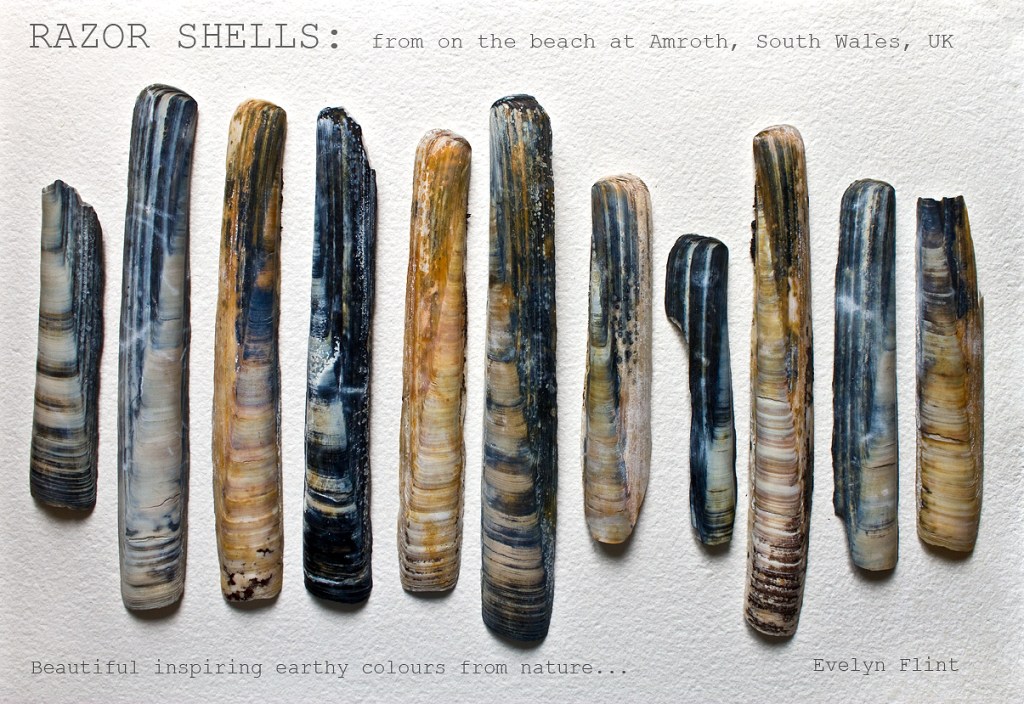
Aren’t they beautiful, natural earthy colours? In my previous post I went through my colour selection process for painting some of these razor shells. Here are some of my razor shell watercolour sketches…

The basic shape of a razor shell is fairly simple. But they are also gently curved which I have tried to capture with curved brush strokes. The colours and tones were built up in layers, being careful to let each layer dry before adding the next. PATIENCE is needed – this is an important lesson I’ve had to learn with watercolour, and it’s taken me a while… !

The watercolour sketches above were also done by building up several layers of watercolour paint. I used mostly blue-grey colours and tones, with small areas of earth colours. To get the shapes of the razor shells above I simply put them on my watercolour paper and very lightly drew round them with a pencil. I also used salt to create some texture in these sketches which you can see better below…
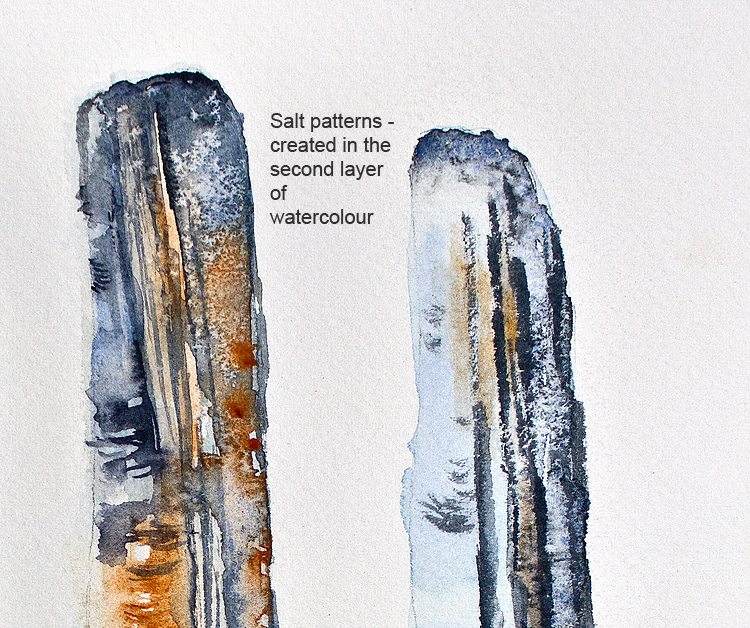
It’s interesting to note that the salt patterns I created were done in the second layer of watercolour, not in the very first wash! I did this deliberately because I wanted the pale colours of the first wash to show through the salt patterns in the darker colours of the second wash. I used just very cheap fine table salt and the delicate texture created is just perfect for these razor shells.

Above are some whelk sketches in lovely blue-grey tones. We actually found whelks this colour at Amroth beach. They were really unusual – I’ve personally never found whelks this colour before. And we only found a couple, so they weren’t exactly in abundance. But I would like to find more!
Finally – Mermaid’s Purses! These were really exciting finds for me, they were the first ever Mermaid’s Purses I’ve ever found while beachcombing…
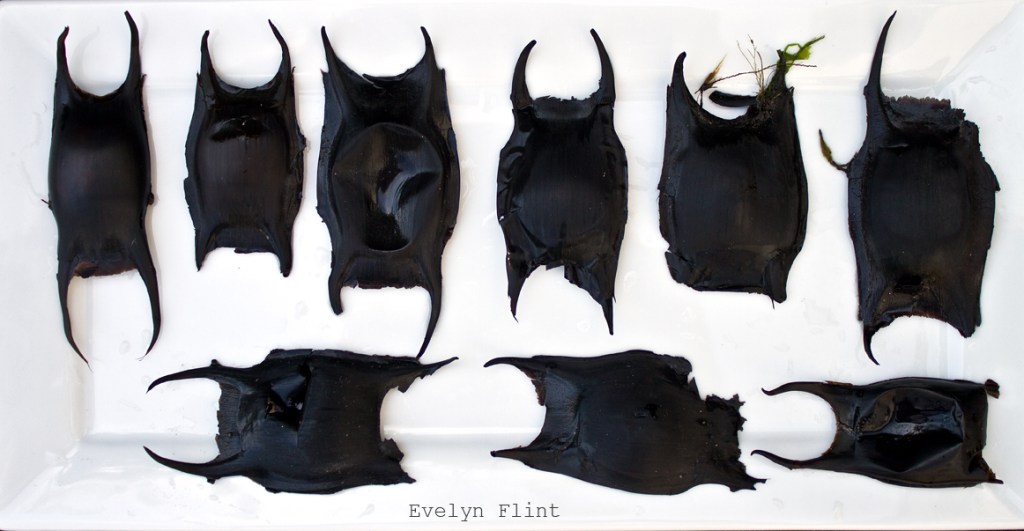
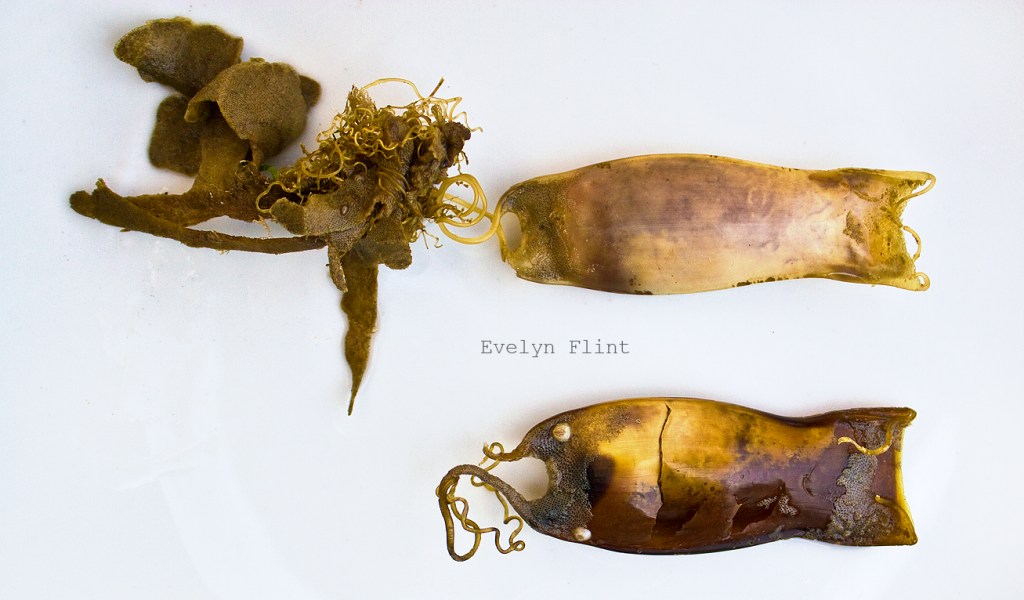
The expression “Mermaid’s Purse” is just lovely! They are actually eggcases. The darker, larger ones above with the horns are skate and ray eggcases, and below them are the smaller green-gold shark eggcases. Exactly which varieties I’ve found I can’t be sure – they can be tricky to identify. But what I do know is that I want to paint them!
What colours do I paint them? With the skate and ray eggcases, it’s easy to look at them and think “oh, they’re black!”. And while it’s true, there are some very dark blackish tones there, there are other colours too. I have the advantage of seeing them in reality and also viewing very large high resolution photographs of them. Along with the “black”, I see blue tones, some mauve and brown tones too…
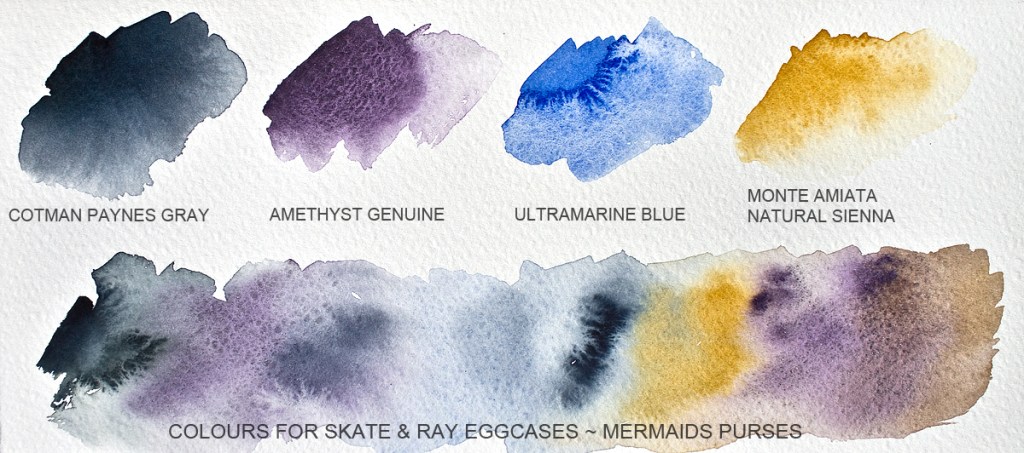
The shark eggcase colours are more easily identified. I see gold, green gold, mauve tones and some earthy greens, also some brown tones as the mauve mixes into the gold and green gold…
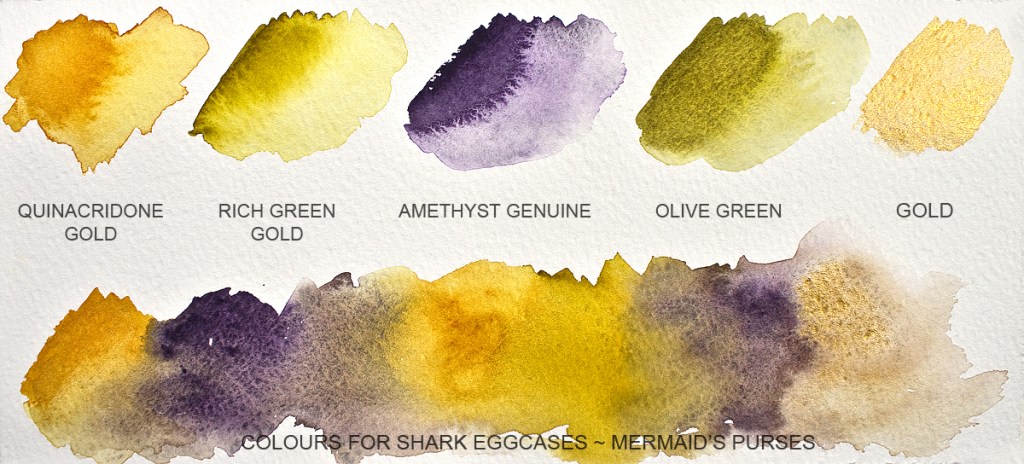
At this stage, these are the colours I plan to use to paint my Mermaid’s Purses. Of course, I always reserve the right to change my mind… !! A little time spent working out what colours to use before painting is always time well spent – less chance of unfortunate colour “surprises”. My Mermaid’s Purses watercolour sketches will go in another post.
Finally, if you love beachcombing as I do, this book is absolutely brilliant:

Here in the UK we’re an island nation, surrounded by hundreds of miles of beautiful coastline. I love exploring our beaches, beachcombing, finding interesting things to inspire my art. But a while ago I reached a point where I wanted to know what it is I’ve found. I want to be able to name the different types of seaweed I find, name all the different shells and the sea creatures I find. This brilliant book helps me do that. Slowly I’m learning the names of the different things I find.
This book is written specifically with the UK’s coastline in mind and I love it. As soon as I get home with my beachcombing finds I get this book out and try to accurately identify what I’ve found. I highly recommend this book.
 INDIGO BEACH ART