Rocks & Seascapes

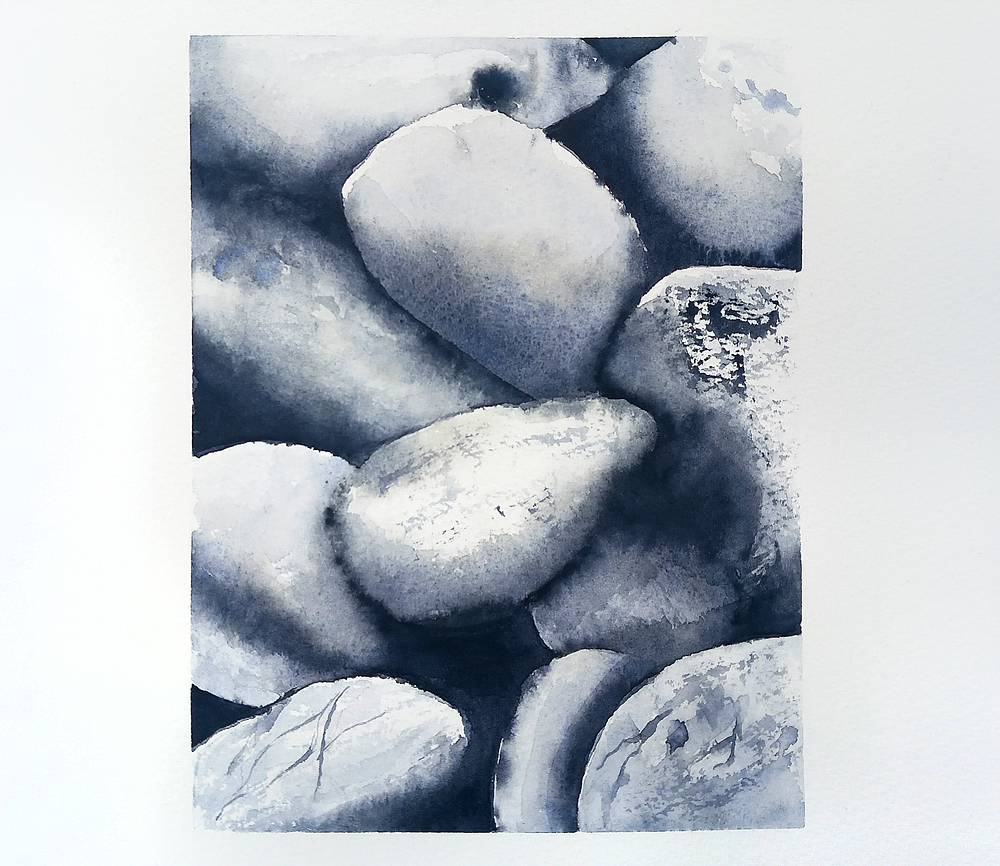
Above I’ve been painting rocks for Maria Wigge’s Diving Deeper With Watercolors course. This was purposely a monochromatic study, focusing on getting a full range of tonal values, plus creating the 3D shapes of the rocks. More rocks/pebbles practice will continue. For this exercise I used just Payne’s Grey on Milford paper.
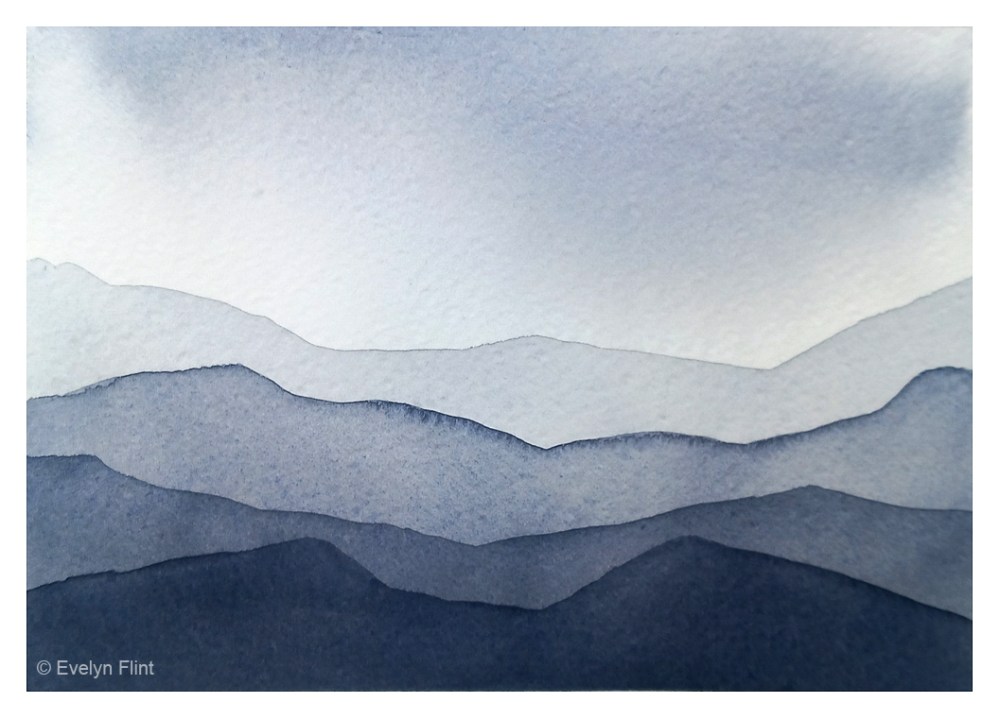
Layers – an exercise in creating layers for Maria Wigge’s Creating Boldly watercolour course

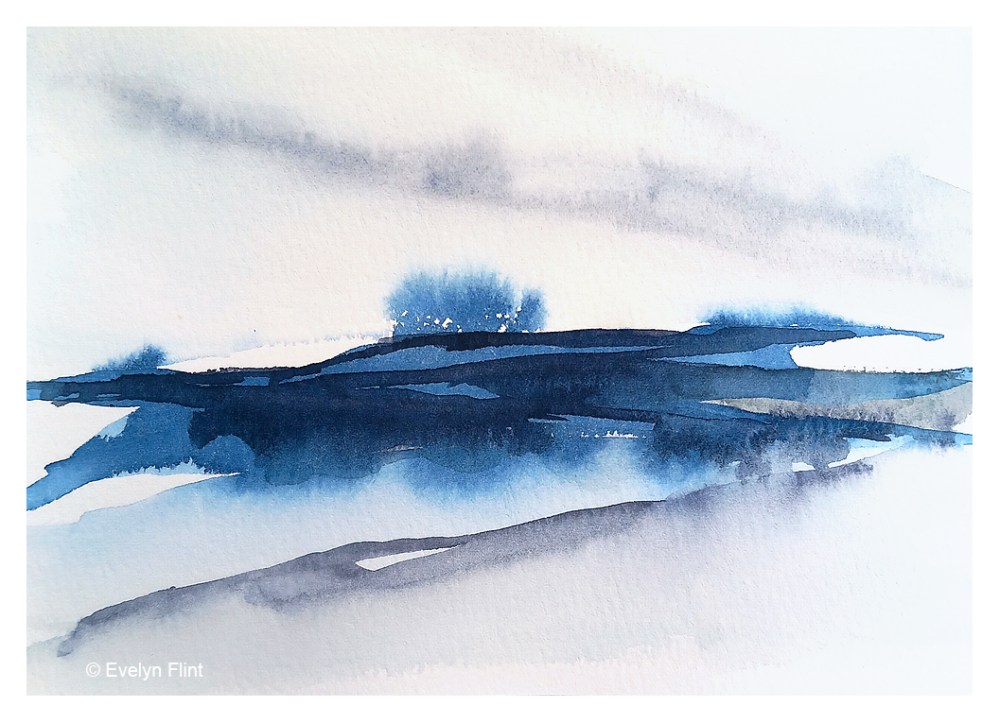
The layers exercise above was painted on Fabriano Artistico 140 lb rough paper. Colour used was Payne’s Grey. I painted the sky area first; then I worked on each layer of mountains, starting with the lightest (at the back) to the darkest at the front. It’s so important to let each layer dry completely before starting a new one. This was also a very simple lesson in aerial perspective – light cool tones recede into the background and warmer darker tones come forward. I will do another one of these exercises with different colours to illustrate this more fully.

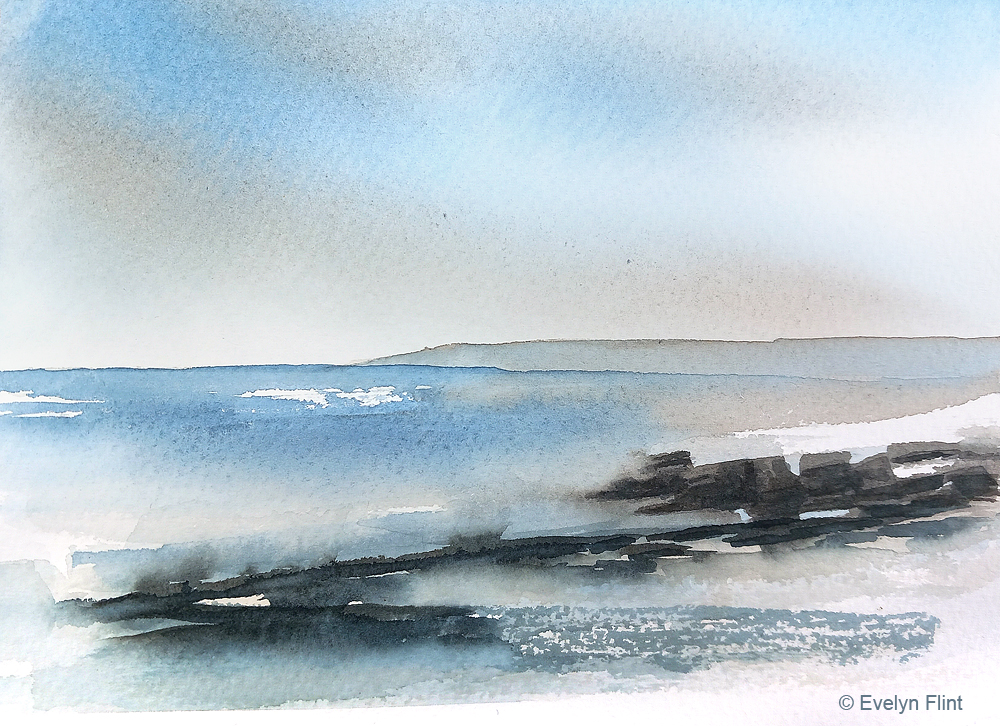
A simple loose watercolour seascape, although it started out as sky practice for Maria Wigge’s Diving Deeper With Watercolors course. Colours used were Phthalo Blue Red Shade, Hansa Yellow Medium, Jane’s Grey and Buff Titanium. I created deliberate watermarks to depict the waves at the shore line; it’s a tricky, slightly unpredictable technique but one I love to do.

Another sky practice piece that turned into a little seascape. Colours used were Ultramarine Blue, Cobalt Blue, Jane’s Grey and Buff Titanium. Both paintings above were painted on Arches NOT 140 lb paper.
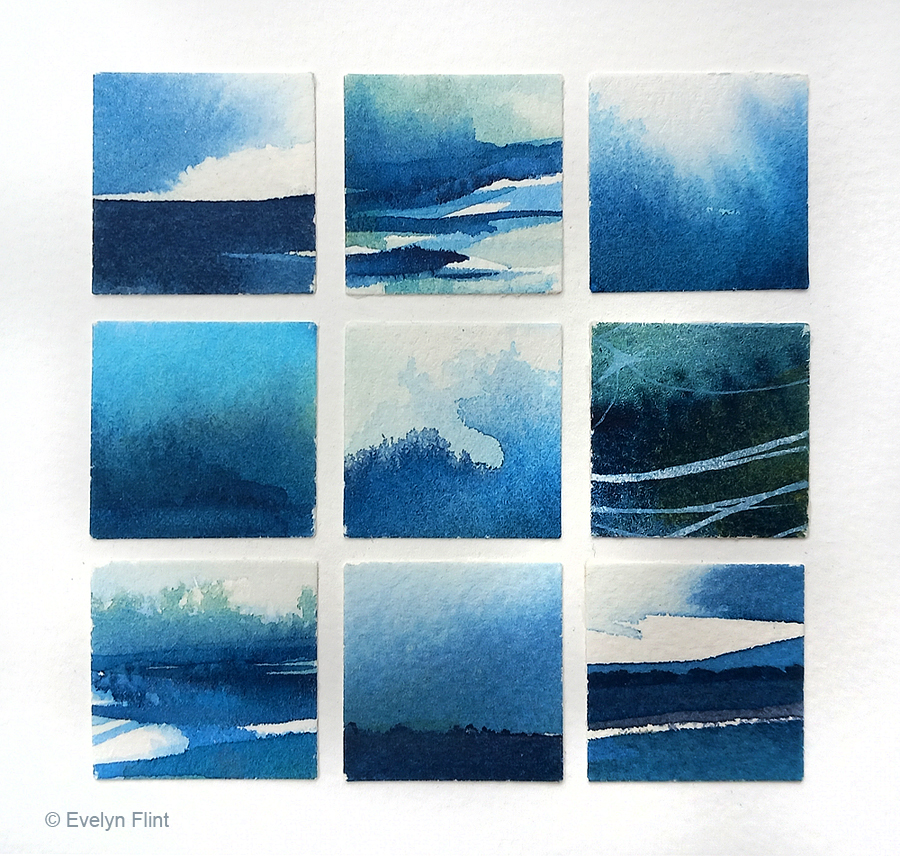
Abstract Indigo Seascapes & Landscapes

When painting efforts don’t go to plan, it’s so easy to just throw them away. Instead I examine them first and see if there’s anything at all I like – usually there is something. Above is a mosaic of small squares cut out from work I didn’t like as a whole. Put all together they make a beautiful new piece of art. And each square may provide inspiration for a new larger piece of work. Happy painting… !
Abstract Landscapes

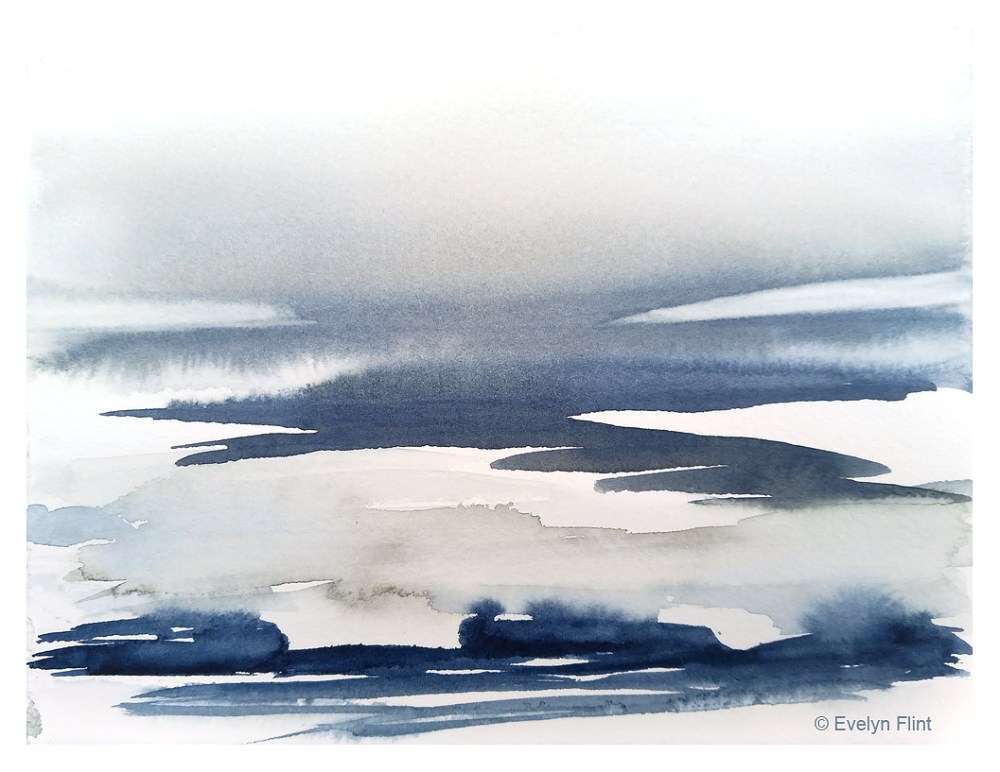
“Storm Coming” Abstract Watercolour Seascape

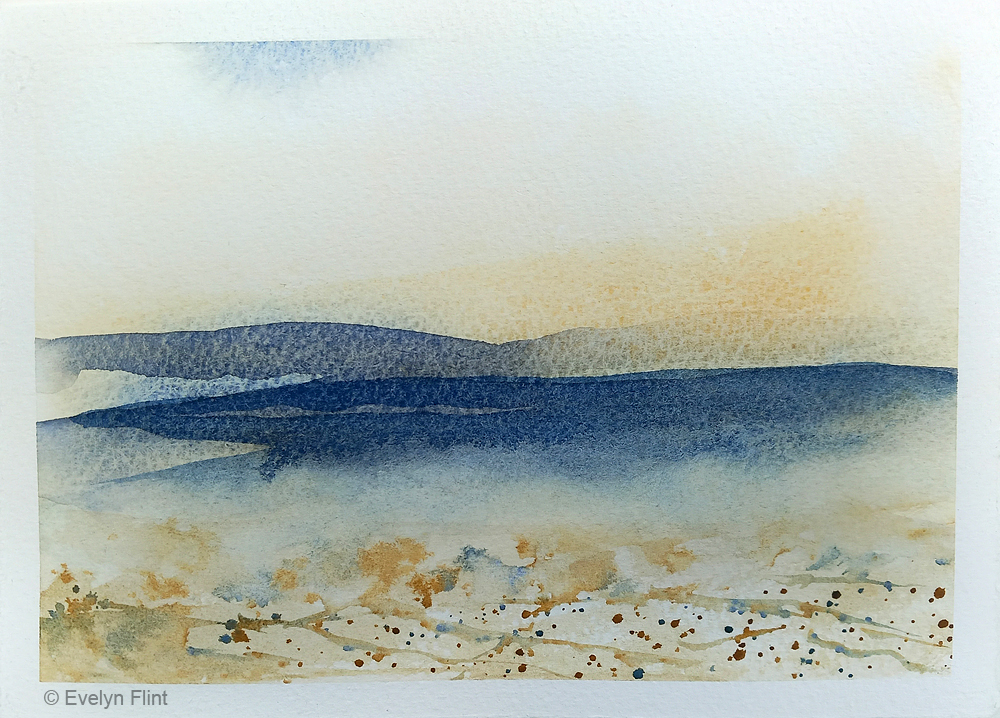
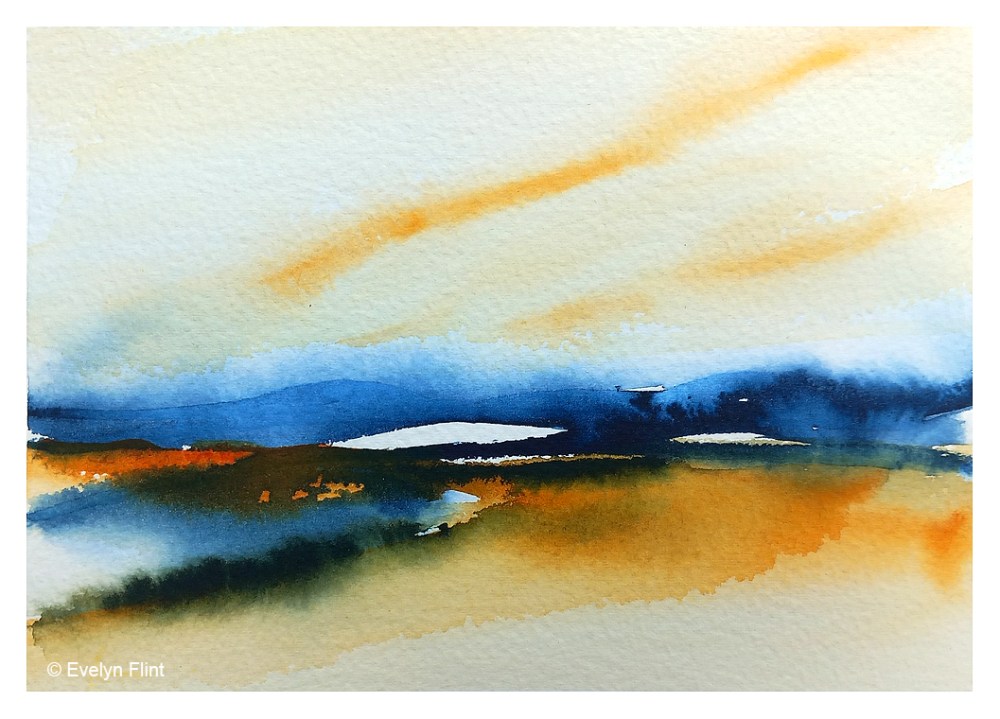
I’m thoroughly enjoying painting the landscapes inspired by Maria Wigge’s online watercolour courses. I’ve given the seascape above a name “Storm Coming”. It was painted on Arches NOT 140 lb paper. The colours I used were Indanthrone Blue and Quinacridone Burnt Orange.

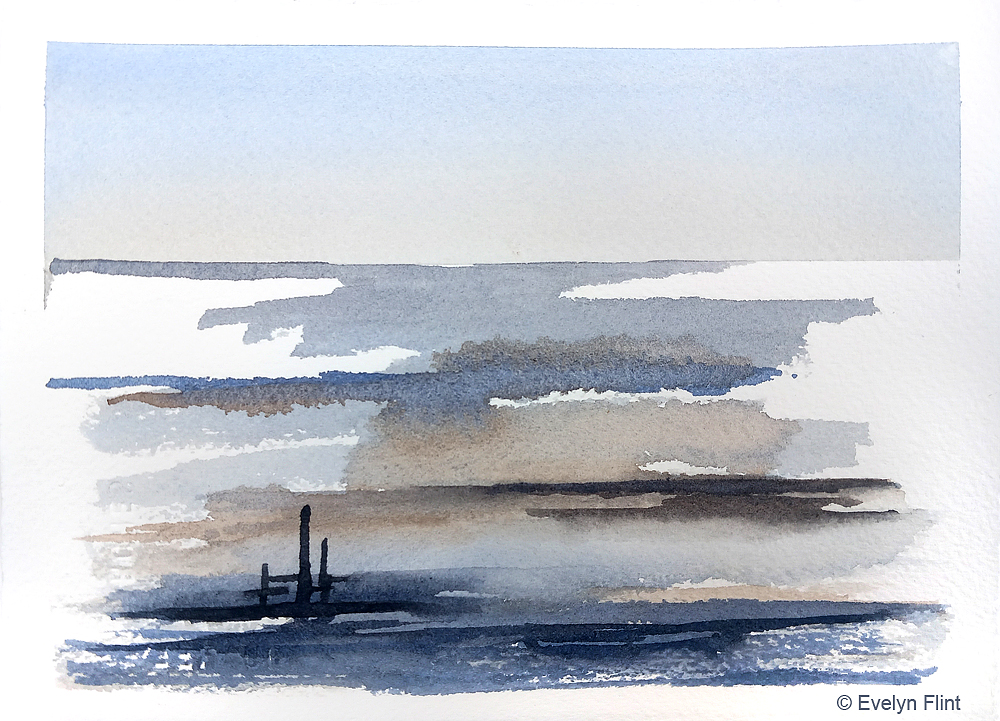
“Beach Layers” Abstract Watercolour Seascape

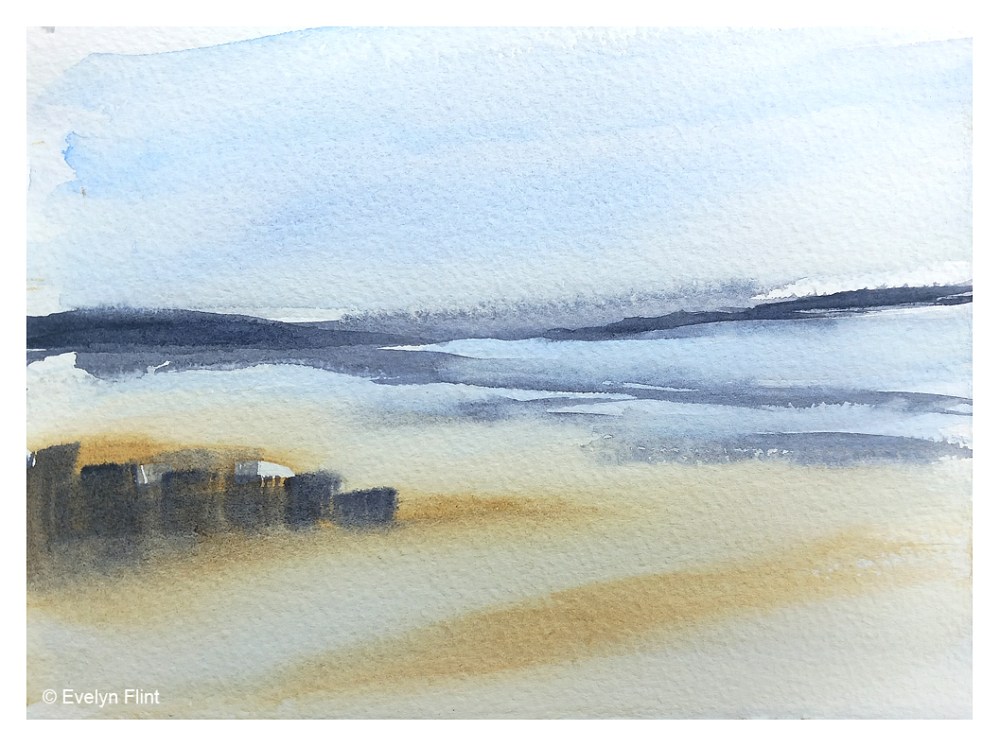
There seems to be a definite seascape theme developing in my abstract landscapes. I just love being by the sea… ! “Beach Layers” was painted on Arches NOT 140 lb paper ; colours used were Ultramarine Blue and Quinacridone Burnt Orange.

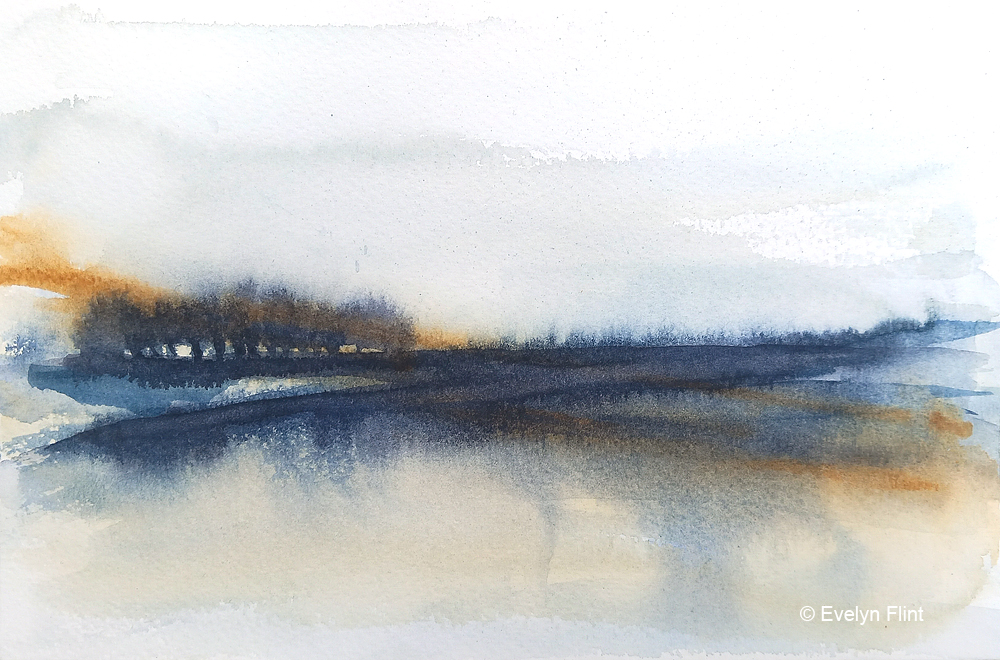
The abstract/loose seascape above was painted on Milford Paper with Indigo and Sepia.

Small abstract landscapes in watercolour

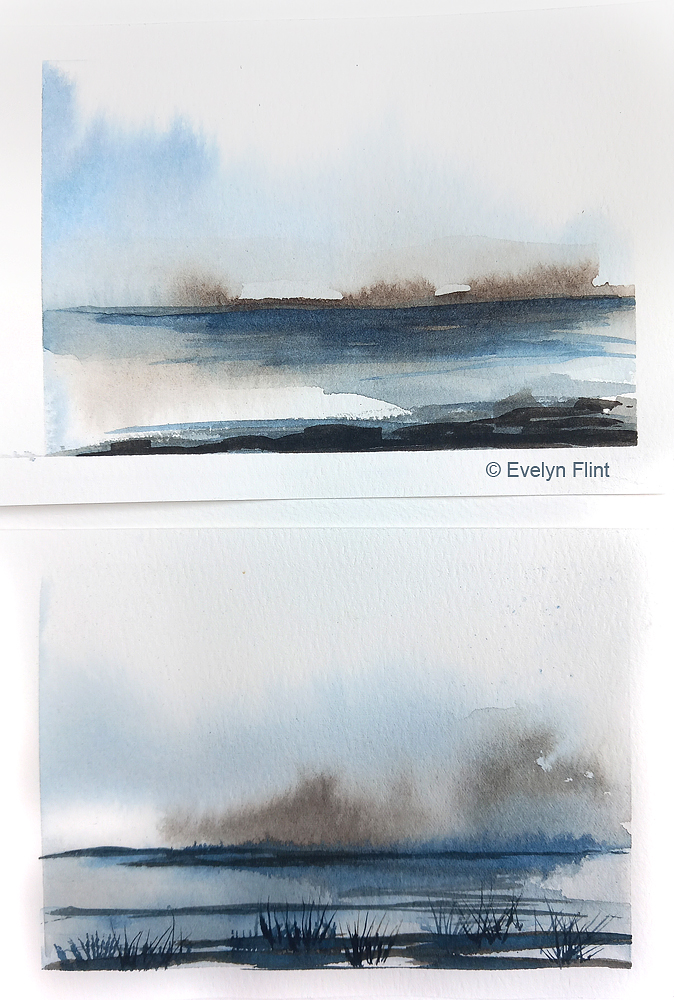
The abstract landscapes above were painted with Indigo and Sepia. This style of painting abstracts taught by Maria Wigge are a joy to create – they’re so much fun and a brilliant way to learn about watercolour techniques and colour.

Cropped!

Above is a selection of bits that I’ve cut out of abstract landscapes that I didn’t like. These will go in a dedicated sketchbook, along with all my landscapes and work created in Maria’s watercolour courses, with notes! These landscapes are addictive too… !

Learning From Maria Wigge

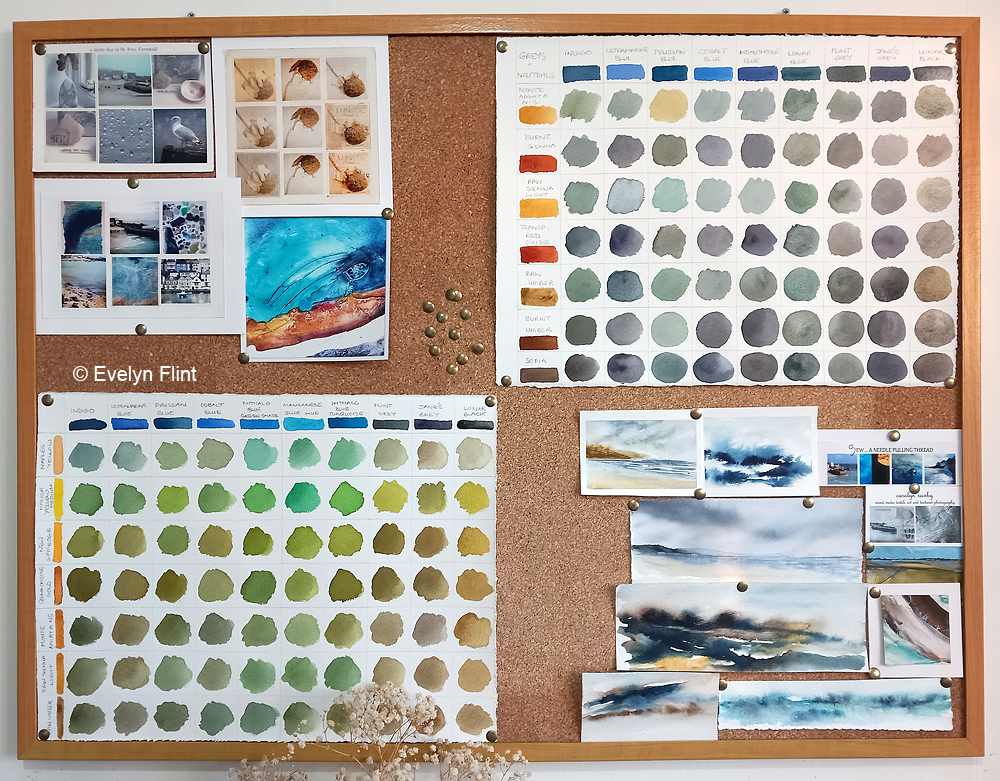
I’m thoroughly enjoying Maria Wigge’s Diving Deeper With Watercolors course! Continuing with getting back to basics, on the course we’ve been encouraged to practice colour mixing. This is something I’ve done a lot of in the past. But I’ve embraced it and done it all over again. By colour mixing I mean mixing a range of colours from different combinations of red, yellow and blue. Maria provided PDF charts for us to fill our with our red, yellow, blue colour combinations. I don’t currently have pictures of mine – I will share those another time. But what I can share now is the two colour charts in the photo above.

Maria strongly encouraged us to create the chart’s above – mixing greys (top right) and mixing greens (bottom left). The greys were mixed from combinations of blues and earth colours. The greens were mixed from just blues and yellows. The colours I used for these charts were all from my studio palette. For this course Maria has simply encouraged us to use the colours we already have – no need to buy new ones! My grey and green colour mixing charts are on the inspiration board in my little home studio, where I can easily see them.

Watercolour Value Charts

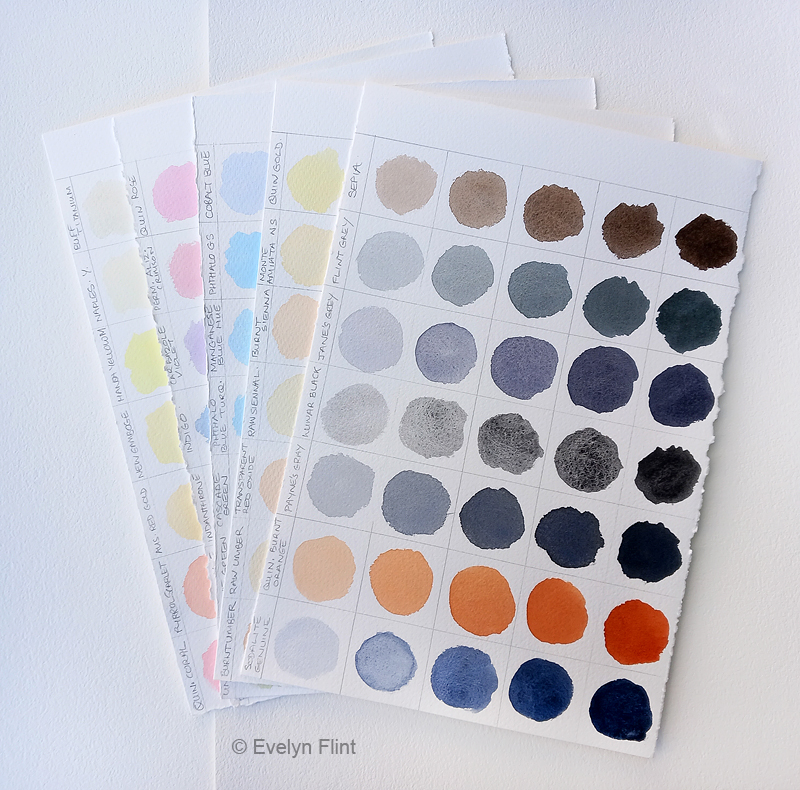
Part of Maria’s “Diving Deeper” course is learning about value. This is extremely important and something I know I need to work on. For a while now I’ve felt that some of my paintings are “missing something” and tonal value is part of the problem. Too many light and mid tones and not enough dark tones. So we were encouraged to make tonal value studies. I created the charts in the photo above. I used the colours from my studio palette, plus a few extra just to fill the last sheet of paper up. I started with the darkest tonal value on the right and worked left with lighter tones. These charts are very useful reference.

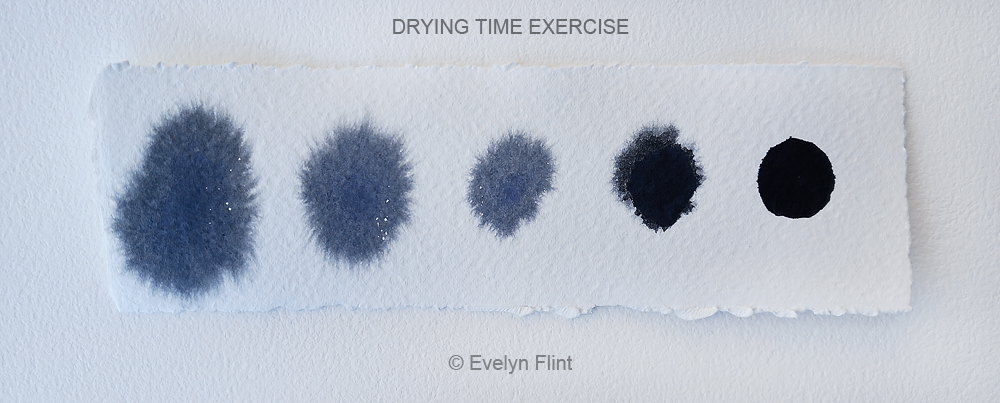
Maria encouraged us to do the exercise above to help us to understand about the drying time for watercolour. Drying time for watercolour is never going to be an exact science! So many different factors affect the drying time – temperature, humidity, being indoors, outdoors, how much water/paint you use etc. For the exercise above I had my colour ready mixed, so I used the same paint for each sample – it was a creamy consistency. In this case I used Payne’s Grey. I wet the paper completely. Starting on the left, with a brush I placed a blob of paint, about the size of a penny, on to the wet paper and then waited for 40 seconds. Then I did the same again. So each of the five blobs of paint above were done 40 seconds apart. Notice how the paint has spread out less with each successive paint blob. The blob on the right didn’t spread at all as the paper had dried by then. Understanding drying times in watercolour is vital. While watercolour is wet it can be worked on, but once it starts to dry it’s better left alone till completely dry. Working on areas of a watercolour that have already started to dry can create messy, muddy marks that can spoil a painting.

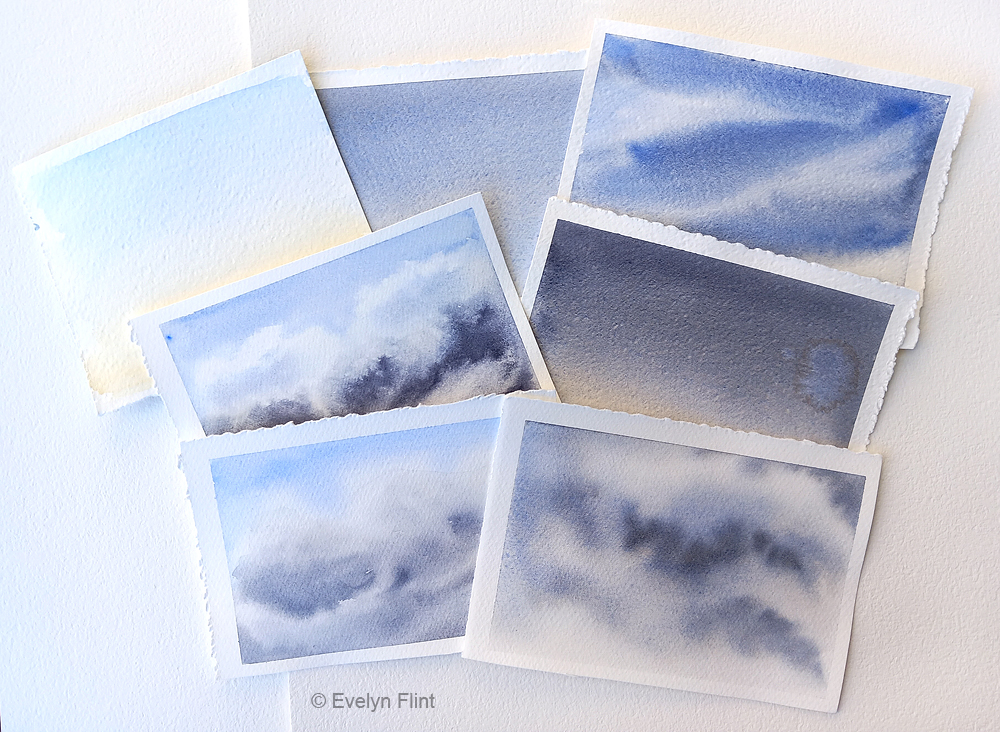
In the course we are looking at each aspect of a landscape individually – skies, water, rocks and trees. Then we will hopefully be able to combine them to create beautiful landscapes. Above are a few of my early sky practices for this course – I have much more to do though… ! Something fundamental to this whole course is PRACTICE. LOTS of PRACTICE. And then EVEN MORE PRACTICE…!

I have also now enrolled on to Maria’s Creating Boldly With Watercolour course too. This course is perfect for beginners who are interested in painting landscapes. I’m not a beginner at watercolour. But I absolutely love this course. The abstract landscapes Maria teaches her students to create in this course are an absolute joy to create. They don’t need hours of dedicated time – just 10 -15 minutes each day. Below are a few of my early abstract landscapes:

Monte Amiata Natural Sienna + Ultramarine Blue
Monte Amiata Natural Sienna, Ultramarine Blue + Burnt Umber
Monte Amiata Natural Sienna, Ultramarine Blue + Flint Grey
Indigo (W/N) + New Gamboge (DS)
Indigo + Flint Grey
Phthalo Blue RS + Jane’s Grey
Monte Amiata Natural Sienna, Ultramarine Blue + Jane’s Grey

Creating these little abstract landscapes is addictive… ! They are so much fun to do. There’s no pressure to create a masterpiece. And it’s an awesome way to learn watercolour techniques and explore what watercolour does.

There’s going to be a lot more of these abstract landscapes – you’ve been warned… ! Happy painting…!